The Mouthwatering History Of Italian Food

Isabella Turner
Published Apr 11, 2026
Sometimes, the most delicious meals are made with almost no budget and very few ingredients, as this history of Italian food shows.
Hard times can give way to some pretty creative — and tasty — thinking. Case in point? The majority of your favorite Italian foods. The delicious simplicity of many Italian dishes stems from lack of money, and historical periods when Italians simply had to make the most of whatever ingredients they had.
Many of these dishes have since become more sophisticated in terms of ingredients and preparation, but to celebrity chef Salvatore Cuomo, that just means more potential to lose the heart of Italian cuisine. “The most distinctive thing about Italian food is the limited number of ingredients used,” Cuomo says. “Many chefs around the world just get it wrong — by using very little, you get it right. That is the secret of Italian cuisine.”
For National Italian Food Day — celebrated on Feb. 13th — Cuomo offered us some of his favorite Italian dishes. We’ve sprinkled in some history about them for good measure:
Lasagne
Indeed, the Greek words “laganon” and “lasanon” — or flat dough sliced into strips and an ancient crock pot, respectively — are considered to be the roots of what we now call lasagne. A mass-produced comfort food today, the dish was originally meant for special occasions, making its debut in Naples during the Middle Ages.
Salvatore CuomoPizza Margherita
Margherita apparently had grown tired of the French cuisine which served as the royal European standard, and asked famous pizza maker Raffaele Esposito to prepare her three pizzas. After declaring her favorite — the basil, tomato and mozzarella pie — Esposito is alleged to have named the Italian flag-themed dish after her. Everything, even pizza, can be political.
Salvatore CuomoGnocchi
In the 19th century, Italian cooking connoisseur Pellegrino Artusi published a recipe for potato gnocchi, which is exactly the same way as we see it prepared today. As with any Italian dish, its accompanying sauce and formation vary according to the region in which it is produced.
Salvatore CuomoRisotto Alla Milanese
In Milan, which was under Spanish rule for centuries, rice became a dietary staple, along with the slow cooking principles associated with Spanish rice dishes such as paella. Milanese cooks eventually added saffron to the slow-cooked rice dish, and thus Risotto alla Milanesa — featured above — was born.
Salvatore CuomoMinestrone
In other words, food blogger Victoria Hansen writes, “minestrone” means “left over”: whatever was available was thrown into the pot along with broth, so as to not waste any food. In the food’s early days, it was associated with the “cucina povera,” or the poor’s cuisine.
Salvatore CuomoCannoli Siciliani
Cannelloni
Tiramisu
Some say that the dish was developed in the ‘60s in the northern Italian town of Treviso, while others suggest that the Sienese developed the coffee dessert for a visit from the Duke. This theory posits that the dish was such a success that people continued to consume it after the royal event, and it eventually became a national favorite by the late ‘70s.
Salvatore CuomoPanna Cotta
Arancini Di Riso
Tufoli Lupini Rosé
Linguini Al Nero
Bolognese Sauce
Pesto Sauce
In fact, the addition of basil — perhaps the most immediate signifier of pesto — is a relatively new addition. The sauce, which might date as far back as Roman times, didn’t incorporate basil until 1863, when gastronomist Giovanni Battista Ratyo included basil in his book, “La Cuciniera Genovese,” or the Genoese cook.
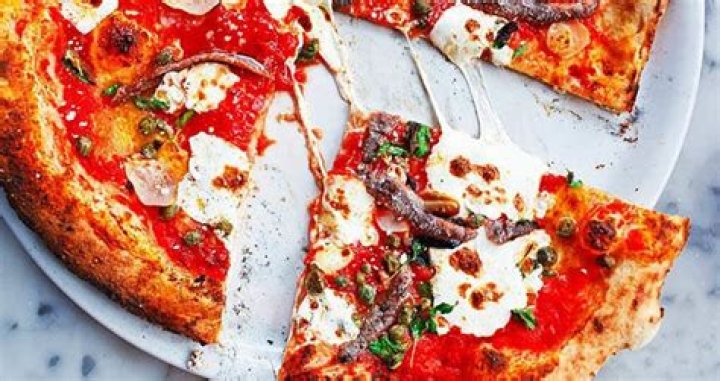
Salvatore CuomoPizza Napoli (with anchovies)
Lamb Scottadito
Beef Carpaccio
Bruschetta
Focaccia
Want more food and drink goodness? Check out how macarons and tiramisu are made.